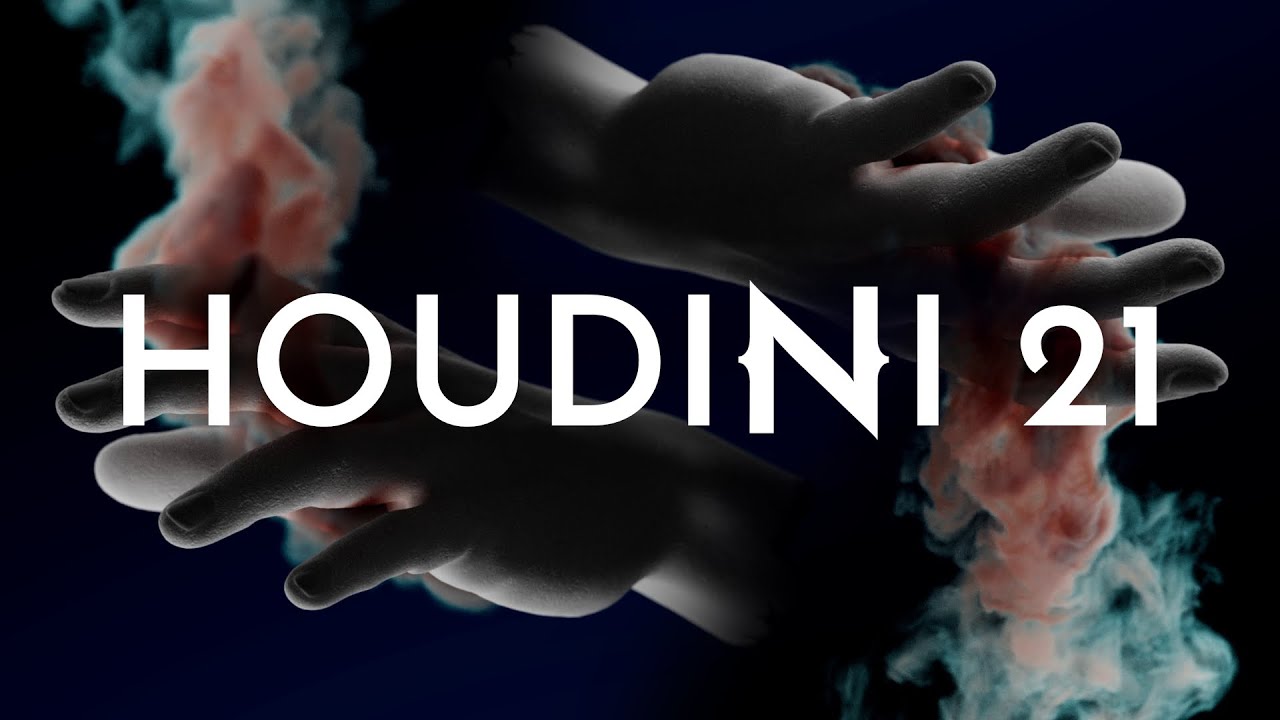
SideFX has expanded its machine learning capabilities in Houdini 21, marking the largest set of AI-based tools integrated into the software to date. In a new video, Entagma provides a high-level walkthrough of the key updates.
Among the updates is the ML Volume Upres node, which enables users to upscale pyro simulations without altering their large-scale shapes. This allows artists to iterate on low-resolution simulations for speed and apply upscaling only at the final stage. The node supports both user-trained models and two pre-trained options provided by SideFX. The system works in tiles, reducing memory requirements and supporting GPU usage with as little as 8 GB of VRAM.
The Neural Point Surface node, also new in this release, converts point clouds into meshes. It is embedded in nodes like the Particle Fluid Surface and MPM Surface nodes. Different pre-trained models are available based on surface characteristics, and custom training workflows are also supported.
The Neural Terrain Paint node, initially shown as a concept in earlier releases, is now functional through content library assets. It allows users to paint terrain features that are then processed with noise and erosion effects by a neural network. This feature is still considered experimental and has limited stability across a wide range of input conditions.
Another addition is the ML Regression Linear node, which performs linear regression directly in Houdini’s SOPs without Python scripting. Demonstrated with examples like estimating projectile motion, it is aimed at use cases such as muscle deformation and character animation, offering faster alternatives to physics-based simulations.
These tools are built on existing frameworks like PyTorch and ONNX, with new simplified interfaces making them more accessible to users without requiring custom Python development.
To find out more, visit sidefx.com.