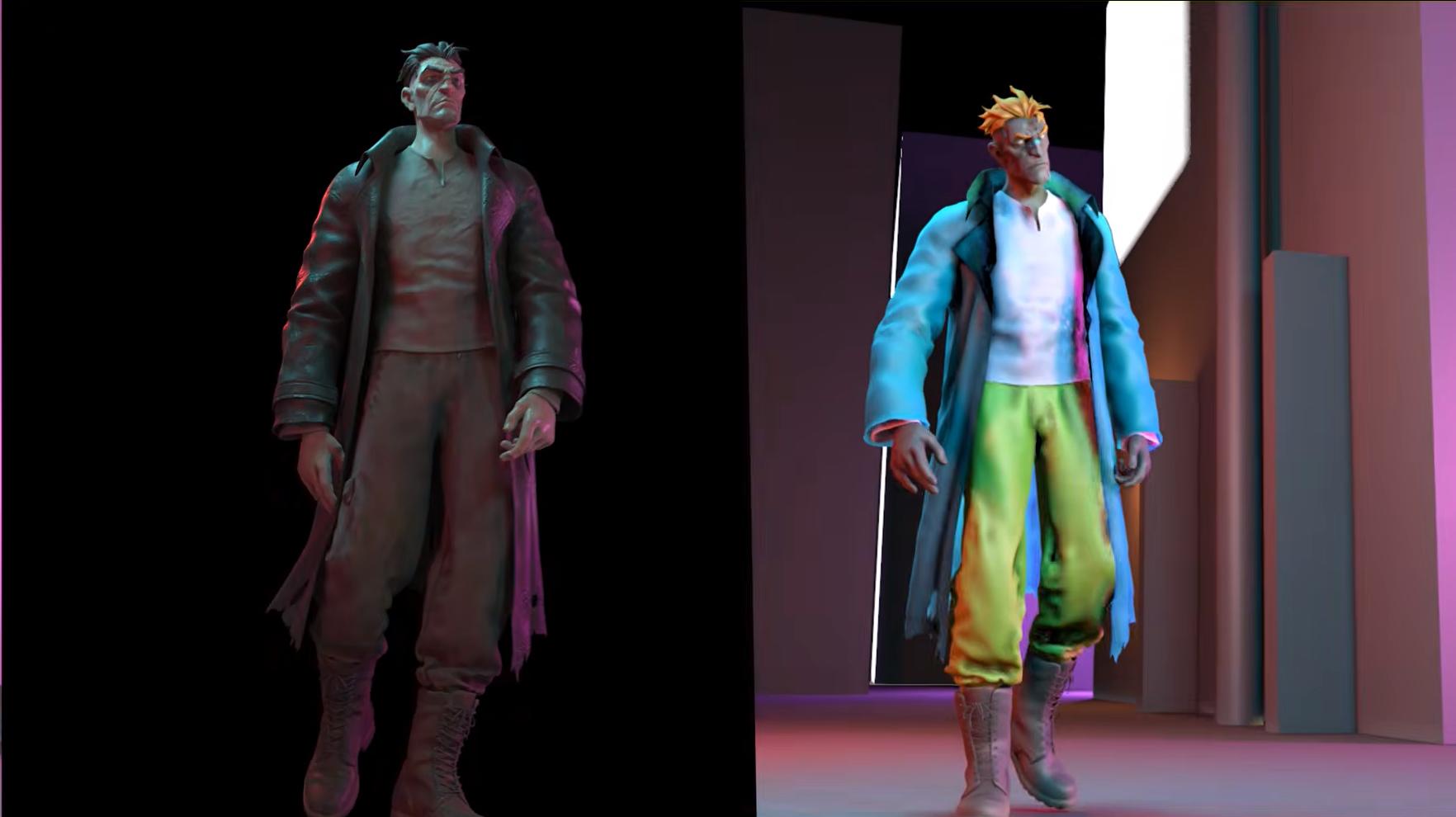
TenPix Cloth is a GPU-accelerated cloth simulation system for 3ds Max. It works as a set of modifiers: you add them to a mesh the way you would add Bend or Skin, play the timeline, and the cloth is simulated on your NVIDIA graphics card.
It’s built for garment and fabric work in production: dressing characters, draping props, flags, curtains and layered outfits, anywhere cloth has to collide properly, stack in layers, hold its seams, tear when it must and react to the scene around it.
Features include:
- GPU solver, dense garments stay interactive.
- Self collision and layers.
- Fabric materials. Twelve stock fabrics and the everyday dials.
- Painted channels. Named weight maps say where a material, a pin, a seam, a tear or a rigid piece applies. So one garment can carry several fabrics.
- Pins, seams and tearing.
- Tnpix Preserve makes a painted region follow the character’s own animation instead of simulating it.
- Tnpix Threads grows warp and weft threads out of every tear. Each thread hangs, swings, collides and snaps on its own, and renders as a tube.
- Soft bodies (experimental) with entry-level muscle simulation.
- Caching and finishing. Record the simulation to a TenPix cache or to Alembic, retime and posterize it, smooth it with Delta Mush, render it with motion blur, and drive a high-resolution mesh from the simulated one with Tnpix Wrap, which also closes the cuts of a torn shell.
TenPix Cloth is developed by Alireza Akhbariarabani. It supports Max 2024–2027 and requires an NVIDIA RTX graphics card (RTX 20-series to RTX 50-series). It’s being offered at a discounted launch price of $150 (will cost $200 after December 31, 2026). A free trial version is available.
Watch a video and find out more on 10Pix Studio’s site and Gumroad.